

Тел: 8(0462) 675-281
JUSTICE REFORM

When the Czech Republic was admitted, the European Union had already recognized the compliance of all its state institutions with European democratic standards. Before that, the Czech Republic had gone through a difficult path of reforms. Since the “Velvet Revolution” of 1989, the country had gained very important and diverse experience that could be useful to Ukraine. Therefore, the experience of the Czech Republic, which allowed the country to become a full member of the EU, is very interesting for our state. This also applies to the issues of judicial reform. Especially now, when Ukraine is undergoing a difficult process of reforming the justice system. Although our state has already achieved many positive results, in particular, in matters of judicial independence, there are still many obstacles to building a truly effective judiciary in Ukraine.
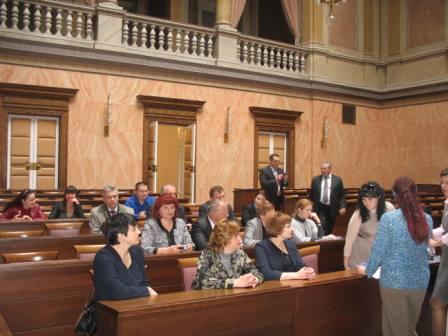
It is precisely in order to continue the path of reforms and bring Ukraine closer to European standards, as well as to transfer to Ukraine the best Czech practices in judicial reform, that the Chernihiv Public Committee for the Protection of Human Rights and the Judicial Association of Ukraine, in cooperation with the League of Human Rights (Czech Republic) and the Czech Union of Judges, continue their joint activities. A new stage of cooperation was the visit to the Czech Republic of representatives of the judicial branch of government and the third sector of Ukraine, which became possible with the financial support of the International Renaissance Foundation within the framework of the East-East program.
The visit turned out to be quite eventful, both in terms of meetings and movements. After all, in the Czech Republic, the justice system is separated from the executive branch and the Parliament, primarily geographically. Thus, most of the central executive bodies are concentrated in Prague, including the Ministry of Justice, and all the highest judicial bodies – the Supreme Court, the Supreme Administrative Court and the Constitutional Court – are located 200 kilometers away in the city of Brno. In addition to meetings with the heads of the above institutions, members of the Ukrainian judicial delegation from different regions of Ukraine were able to meet with the Czech Ombudsman and the leadership of the Czech Association of Judges.
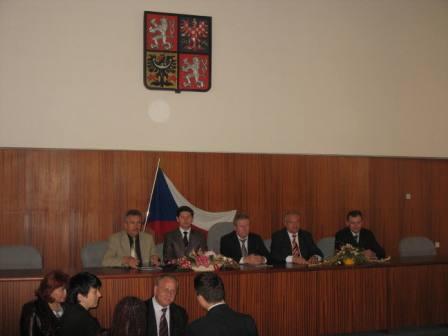
However, as it turned out, the institutional separation of the judicial branch from the executive branch is much less geographical: the court system in the Czech Republic falls under the sphere of influence of the Ministry of Justice, and all appointments to judicial positions and administrative positions in the courts are made exclusively by the Minister of Justice and the President. In the Czech Republic, there is no general system of self-government of judges at all. There is only a public organization of judges – the Czech Union of Judges. In Ukraine, on the contrary, the system of self-government of judges is quite powerful and completely independent, and moreover, it has a lot of powers – all appointments to administrative positions in the courts are made by it.
The judges-members of the delegation were somewhat shocked by this situation, they could not even imagine how judges could work in Ukrainian conditions under the Ministry of Justice. Therefore, one of the results of the visit, in addition to familiarization with the Czech experience, was a reassessment of the achievements of Ukrainian democracy in the field of justice.
In general, the visit was a good start to full-fledged cooperation and communication between judges of the Czech Republic and Ukraine and is a continuation of the corresponding visit to Ukraine of Czech judges in April 2009.
The participants of the event – Chernihiv Public Committee for the Protection of Human Rights, the Judicial Association of Ukraine, the League of Human Rights and the Czech Union of Judges are currently working on the next stages of cooperation.