

Тел: 8(0462) 675-281
MOBILE HUMAN RIGHTS GROUPS

The main subject of the mobile group’s research was the conditions of detention of detainees in the city district department’s detention center. The public representatives aimed to investigate not only the current situation in the relationship between law enforcement officers and detainees. They were interested in the maximum number of various parameters that would allow them to create the most complete picture of the functioning of the detention center. In particular, they were talking about the year the building was built and put into operation, the presence of all the premises provided for by the standards, the level of lighting and quality of ventilation, the temperature regime in the cells, etc.
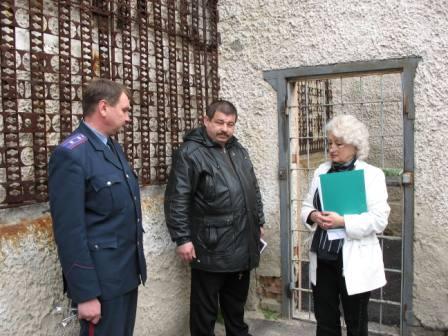
Actually, the narrowly professional concept of “regime” also interested public activists: what is the content of the cells, how do their temporary residents feel, do they have the opportunity to receive messages, go for walks, how is medical care provided, if necessary, etc.
To fully understand the specifics of the institution, members of the Public Council not only inspected the auxiliary premises, but also talked with two randomly selected persons from among those detained in the isolation ward.
Formulating the general impression of what was seen in the Nizhyn city police department’s detention center, Public Council member Tamara Petrova noted that the mobile group identified a number of inconsistencies in the current state of affairs with the provisions of generally recognized international documents on ensuring human rights, primarily in terms of the specifics of keeping minors in such institutions. At the same time, she emphasized that this statement is not a claim against the institution’s staff or the management of the city police department. Rather, it is about inadequacies in national legislation and departmental orders that allow arbitrarily interpreting international norms and acting depending on the circumstances. Also noticeable are the many years of neglect of European requirements for ensuring fundamental human rights, the consequences of which have not yet been fully overcome, and the very modest funding of internal affairs bodies, which excludes the possibility of quickly transforming police detention centers into fortified islands of Europe.
Central Prison Service of the Ministry of Internal Affairs of Ukraine in Chernihiv Oblast